Category: Basketball

  • Training Around a Full Course Load Without Losing My Mind

    THE BALANCE
    • 5 min read

    Training Around a Full Course Load Without Losing My Mind

    People ask how I find time for basketball and the gym while doing an MIS degree. The honest answer: I don’t “find” time, I build it in — the same way I’d schedule a lecture. Here’s how I stop sport and studying from constantly fighting each other, and why training has actually made me a better student, not a more distracted one.

    Treat workouts like appointments

    The biggest shift was deciding my gym sessions and games are non-negotiable blocks in my calendar, not “I’ll go if I have time” activities. Because if it’s optional, it’s the first thing I cut the moment a deadline appears — and then I’d vanish from the gym for weeks. Now they sit in my schedule with the same weight as a class, and everything else gets arranged around them. Sounds rigid, but it kills the daily “should I go or not” debate that used to drain me.

    Why moving makes the studying better

    I used to feel guilty playing ball with assignments waiting. Over time I noticed I get more done in a focused two-hour study block after exercise than in a sluggish four-hour block where I’m tired and staring at the screen. Exercise resets my head. Some of my best ideas for a database project or a group presentation have shown up halfway through a workout — not while forcing myself to sit at a desk.

    A typical week

    No two weeks are identical, but a normal one is: gym three times, one proper basketball session at the weekend, the rest on coursework. On heavy deadline weeks I shorten gym sessions to 30 minutes rather than skip them — something always beats nothing. Keeping even a little training going through exam season is what stops me losing the habit entirely and having to restart from zero afterwards.

    The video that sums up my mindset

    If one idea ties all of this together, it’s consistency over intensity. The video below is the kind of thing I keep in mind on days I don’t feel like training or studying — small efforts repeated, not heroic one-off grinds.

    What I’d tell another student

    You don’t have to choose between being a serious student and being active. Block the time in advance, accept some weeks will be lighter, and remember a short session beats nothing. Treating my body well has made me sharper in class, not lazier. If you’re on the fence about whether you “have time” to train this semester — the training is part of what makes the rest of the semester manageable.
  • How I Stopped Gassing Out by the Second Quarter

    BASKETBALL
    • 4 min read

    How I Stopped Gassing Out by the Second Quarter

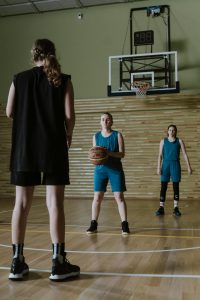
    For the longest time I had the exact same problem every game. The first ten minutes? Unstoppable. Running the floor, getting back on defence, calling for the ball. Then somewhere in the second quarter my legs turned to concrete and my “defence” became politely waving at whoever I was meant to be guarding. If you play pickup, you know that guy. For a long time, that guy was me.

    Here’s how I actually fixed my conditioning in one semester — no fancy equipment, no personal trainer, just a student schedule and a bit of stubbornness.

    It wasn’t a skill problem

    The first thing I had to swallow was that I wasn’t bad at basketball when I was fresh. My shot was fine, I could read the game. I just couldn’t do any of it for longer than eight minutes before my body quit. The moment I reframed it as a conditioning problem instead of a skill problem, it stopped being embarrassing and became something I could train.

    Intervals beat long runs

    My first instinct was steady jogging. It helped a little, but basketball isn’t a steady-state sport — it’s sprint, stop, cut, jog, sprint again. So I switched to intervals that mimic the game: sprint hard 30 seconds, walk or jog 60, repeat for about 15 minutes. Brutal at first. But within a few weeks my recovery time between sprints on the court shrank dramatically, and that “I need a sub NOW” feeling showed up way later, if at all.

    Train legs in the gym, not just on the court

    This is where the gym and basketball finally clicked for me. I added two simple lower-body sessions a week — squats, lunges, calf raises, plus core. The squats especially were a game-changer. Stronger legs meant I wasn’t fighting my own body just to keep jumping and cutting late in games. If you only ever train your jump shot and never your legs, you’re leaving free improvement on the table.

    The boring stuff mattered most

    Honestly? The two biggest wins weren’t training at all. First: sleep. As a student it’s tempting to run on five hours and caffeine, but on properly-slept days my endurance was noticeably better. Second: drinking water through the day instead of chugging it right before tip-off. Showing up already hydrated beats trying to catch up once you’re already cramping.

    🏀 The takeaway: being out of shape is one of the most fixable problems in basketball. Start with intervals, add a couple of leg days, treat sleep like part of your training, and give it a month. Your fourth-quarter self will thank you.